
Everything Tesla Owners Need to Know Before Replacing Their Windshield
That tiny rock chip on your Model Y? It’s not just a cosmetic annoyance. For Tesla owners, windshield damage opens up a whole different can of worms compared to regular vehicles.
Most people discover this the hard way. They call their usual auto glass shop, get a quote, and then hear the dreaded words: “Actually, your car needs calibration after the replacement.” Suddenly that $300 job becomes a $1,200 ordeal.
Tesla windshields aren’t just glass. They’re packed with cameras, sensors, and coatings that make replacement more complicated and more expensive. But here’s the good news: once you understand what you’re dealing with, the process becomes a lot less stressful.
Let’s break down everything you need to know before you replace that windshield.
Why Tesla Windshields Are Not Like Regular Car Glass
Built-In Tech That Complicates Everything
Your Tesla windshield does a lot more than keep bugs out of your face.
Mounted directly behind the glass is the forward-facing camera cluster that powers Autopilot. This camera system handles lane keeping, automatic emergency braking, traffic sign recognition, and a bunch of other safety features you probably use every day without thinking about it.
But that’s not all. Your windshield also houses rain sensors that trigger automatic wipers, ambient light sensors that adjust your display brightness, and in some models, sensors for the cabin camera.
Then there’s the glass itself. Tesla uses an acoustic interlayer that reduces road noise and makes the cabin quieter. There are also special coatings that block UV rays and infrared heat, keeping the interior cooler without working the AC as hard.
All of this tech means your windshield isn’t just a piece of glass. It’s an integrated component of your car’s safety and comfort systems.
The Glass Itself Is Different
Take a look at a Model 3 or Model Y windshield and you’ll notice something immediately. It’s huge. The glass sweeps up from the hood and extends well into the roof, giving you that open, airy feeling Tesla is known for.
This larger surface area looks great but creates challenges for replacement. The glass needs to match exact specifications for curvature and dimensions.
Tesla also uses thinner glass than most manufacturers. This saves weight and helps with range, but it also means the windshield can be more vulnerable to damage. Many owners joke that their Tesla attracts rocks like a magnet.
The curved design that improves aerodynamics also requires precise installation. Even small gaps or misalignments can cause wind noise, leaks, or problems with sensor performance.
How Much Does Tesla Windshield Replacement Actually Cost
Let’s talk numbers. And fair warning, they might sting a little.
Price Ranges by Model
The cost varies quite a bit depending on which Tesla you drive:
- Model 3 runs between $800 and $1,500 for a full replacement including calibration.
- Model Y is similar but can push higher, typically $900 to $1,800, partly due to the larger glass area.
- Model S with its premium positioning costs more, usually $1,200 to $2,000.
- Model X with that massive windshield and falcon wing door complexity often hits $1,500 to $2,500.
Cybertruck owners are looking at $2,300 or more. Tesla has actually warned that replacing a Cybertruck windshield is “quite an invasive surgery” because the old glass essentially has to be sawn out of the frame.
What Drives the Cost Up
Several factors push your final bill higher or lower.
ADAS calibration adds $150 to $400 on top of the glass replacement. Some shops include this in their quote, others don’t. Always ask.
OEM glass from Tesla costs more than aftermarket alternatives. The price difference can be $200 to $500, but there are tradeoffs we’ll cover later.
Mobile service versus bringing your car to a shop can affect pricing. Mobile is convenient but sometimes carries a premium.
Your location matters too. Replacement in Phoenix or Miami will likely cost less than in a smaller market where fewer shops have Tesla experience.
ADAS Calibration Is Not Optional
This is the part that catches most Tesla owners off guard. You cannot just slap in a new windshield and drive away. Well, you can, but you really shouldn’t.
What Gets Thrown Off When You Swap the Glass
The cameras behind your windshield are calibrated to incredibly precise tolerances. We’re talking about angles measured in fractions of a degree.
When you remove the old windshield and install a new one, even tiny differences in glass thickness, curvature, or mounting position can throw off those camera angles.
Now your Autopilot camera is looking at the road from a slightly different perspective. Lane lines might appear shifted. Distance calculations could be off. The system that’s supposed to slam the brakes before you hit something might react too early, too late, or not at all.
Static vs Dynamic Calibration
Calibration typically happens in two phases.
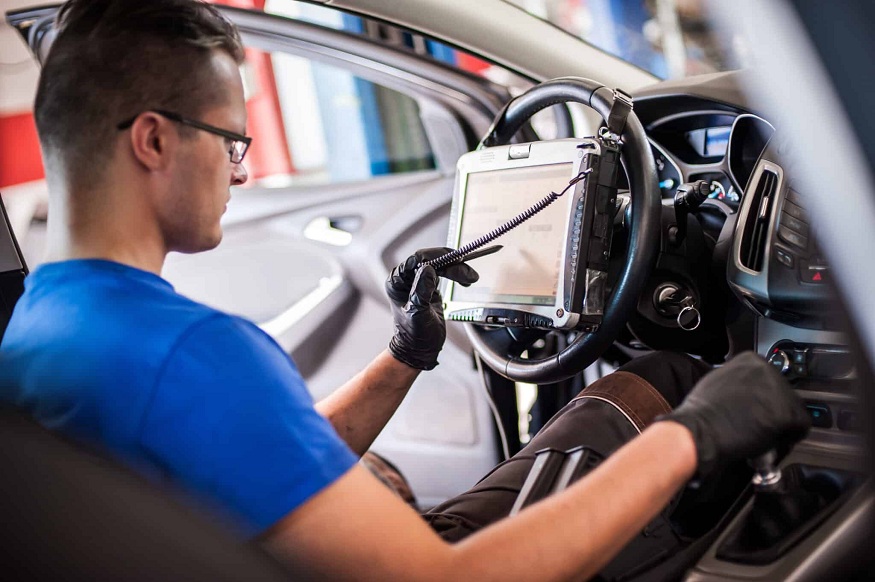
Static calibration is done in the shop. The technician sets up a specific target pattern in front of your car, and the system uses that known reference to realign the cameras. This needs a controlled environment with proper lighting and precise target placement.
Dynamic calibration happens while driving. You’ll need to drive at certain speeds on roads with clear lane markings so the system can fine-tune its alignment using real-world references.
Tesla vehicles usually require both types of calibration for full accuracy. This is why it’s critical to choose a shop that offers professional ADAS calibration services with the right equipment for your specific model.
What Happens If You Skip It
Some people try to save money by skipping calibration. Bad idea.
Your safety features will malfunction. Forward collision warning might trigger randomly or not trigger when it should. Lane keeping might pull you toward the wrong part of the lane.
Autopilot may refuse to engage entirely. The system runs self-checks, and if the calibration is off beyond acceptable limits, it’ll disable itself.
There’s also a liability angle. If you get into an accident and your safety systems weren’t properly calibrated, you could face some uncomfortable questions from insurance adjusters or lawyers.
Tesla Service Center vs Independent Auto Glass Shop
You have two main options for replacement: go through Tesla directly or find an independent shop. Both can work, but the experience differs.
Going Through Tesla
The upside of using a Tesla Service Center is certainty. You’ll get genuine OEM glass, installed by technicians who work on Teslas all day, with calibration done exactly to factory specs.
The downside is availability and cost. Tesla Service Centers are often booked out weeks in advance. And their pricing tends to be on the higher end. You’re paying for the peace of mind that comes with the Tesla name.
For some owners, especially those with newer or higher-end models, this tradeoff makes sense. You know the job will be done right.
Using an Independent Shop
Independent auto glass shops can be faster and cheaper. Many can get you in within days rather than weeks, and their pricing often undercuts Tesla by a few hundred dollars.
But not all shops are created equal when it comes to Tesla.
You need to verify they actually have experience with your specific model. A shop that’s done hundreds of Honda windshields but only a handful of Teslas might not be the best choice. Look for providers that specialize in Tesla windshield replacement and understand the unique requirements of electric vehicles.
Ask about their calibration equipment. Do they have the tools to properly calibrate Tesla’s camera systems? Do they do it in-house or send you somewhere else?
Find out what glass they use. Some shops offer OEM glass, others use OEM-equivalent aftermarket, and some use whatever’s cheapest. You want to know what’s going into your car.
Questions to Ask Before You Book
Before you commit to any shop, get clear answers to these questions:
- How many Tesla windshields have you replaced, and specifically which models?
- What brand of glass do you use? Is it OEM or aftermarket?
- Do you handle ADAS calibration in-house, or will I need to go somewhere else?
- Is calibration included in your quote, or is it extra?
- What warranty do you offer on the glass and the installation?
A good shop will answer these questions confidently. If they dodge or seem unsure, keep looking.
Does Insurance Cover Tesla Windshield Replacement
Here’s some potentially good news. Your insurance might cover most or all of the cost.
Comprehensive Coverage Is Key
Windshield replacement falls under comprehensive coverage, not collision. So if you only carry liability insurance, you’re paying out of pocket.
But if you have comprehensive coverage, your windshield damage is typically covered. You’ll pay your deductible and insurance handles the rest.
Given that Tesla windshields can cost over $1,000 to replace, having comprehensive coverage makes a lot of financial sense for Tesla owners.
Zero Deductible States
Some states have laws that make windshield replacement even more affordable.
Florida requires insurance companies to waive the deductible for windshield replacement if you have comprehensive coverage. You pay nothing out of pocket.
Arizona requires insurers to offer optional zero-deductible glass coverage. If you added this to your policy, your replacement is fully covered. Drivers in these states can often get mobile windshield replacement in Arizona or Florida at no out-of-pocket cost with the right insurance.
South Carolina has similar full safety glass coverage requirements.
If you live in one of these states and have the right coverage, your Tesla windshield replacement could cost you zero dollars.
Tesla’s New Windshield Protection Plan
Tesla recently launched its own Windshield Protection Plan, a subscription service specifically for this problem.
The monthly cost depends on your model. Model 3 and Model Y owners pay $12 per month. Model S is $15. Model X runs $23.
For that monthly fee, you get one free windshield replacement per year with no deductible. If you need a second replacement within 12 months, there’s a $100 copay. You also get unlimited repairs for chips and minor cracks.
The catch is timing. You need to sign up within 30 days of taking delivery of your Tesla. Miss that window and you’ll need to pass a vehicle inspection or pay for a replacement first before you can enroll.
The plan doesn’t currently cover Cybertruck, which is unfortunate given how expensive those windshields are.
Will a Claim Raise Your Rates
Most of the time, no. Glass-only claims are generally considered no-fault and don’t trigger rate increases.
However, this can vary by insurer and by your overall claims history. If you’ve filed multiple claims recently, adding a windshield claim might push you into a different risk category.
When in doubt, ask your insurance agent before filing.
OEM Glass vs Aftermarket What Actually Matters
You’ll face a choice between original equipment manufacturer glass and aftermarket alternatives. Here’s how to think about it.
Why OEM Is Usually the Safer Bet
OEM glass is made to Tesla’s exact specifications. It matches the original in thickness, curvature, coatings, and acoustic properties.
This matters for fit. OEM glass will sit in the frame exactly as the factory glass did, with no gaps or alignment issues.
It matters for sensors. The coatings and glass properties won’t interfere with camera or sensor performance.
And it matters for consistency. You know exactly what you’re getting.
For newer Teslas with full Autopilot capabilities, OEM glass is the conservative choice.
When Aftermarket Might Work
Aftermarket glass has improved significantly. Some brands like Fuyao and Pilkington make glass that meets or exceeds OEM specifications.
If you’re driving an older Tesla without the latest Autopilot hardware, aftermarket glass from a reputable brand can work fine and save you money.
If budget is a serious constraint, quality aftermarket glass is better than driving around with a cracked windshield.
Just make sure you know the brand and verify it’s appropriate for your model and year.
What to Avoid
Stay away from no-name glass with no documentation or certifications. If the shop can’t tell you exactly what brand they’re installing, that’s a red flag.
Be skeptical of prices that seem way too low. Quality glass and proper installation cost money. If someone’s undercutting the market by 50%, ask yourself what they’re cutting corners on.
Avoid shops that dismiss your questions about glass quality or calibration. A professional shop understands why these things matter and will take your concerns seriously.
How Long Does the Replacement Take
Plan for about half a day if you want everything done right.
The actual removal and installation takes 60 to 90 minutes in most cases. Technicians need to carefully remove the old glass, clean the frame, apply new adhesive, and set the new windshield precisely.
Then the adhesive needs time to cure. You should wait at least one to two hours before driving. Some adhesives need longer. Your technician will tell you the safe drive-away time based on the products they use.
Calibration adds another 30 to 60 minutes. This includes setting up targets, running the static calibration, and possibly taking the car out for dynamic calibration.
All told, expect three to four hours from drop-off to pickup if everything happens in one visit.
Some shops may ask you to bring the car back the next day for calibration after the adhesive has fully cured. This adds inconvenience but can actually produce better results.
Tips to Make the Process Smoother
A little preparation goes a long way.
Document the damage before your appointment. Take clear photos of the chip or crack with good lighting. This helps if there are any insurance questions later.
Check your insurance coverage ahead of time. Know your deductible and confirm that glass replacement is covered. If you’re in Arizona, Florida, or South Carolina, verify you have the zero-deductible option.
Clear out your car before the appointment. Remove everything from the dashboard and front seats. Technicians need access to the windshield area, and your stuff will be safer at home.
Ask for written confirmation of the glass brand being installed and that calibration is included.
Don’t slam doors for 24 hours after installation. The pressure changes from slamming can stress the new adhesive before it’s fully cured.
Avoid car washes for at least 48 hours. High-pressure water and those spinning brushes can compromise the seal while it’s still setting.
Test your systems after you get the car back. Make sure Autopilot engages, wipers work properly, and you don’t see any warning messages related to cameras or sensors.
Final Thoughts
Tesla windshield replacement is more complex and more expensive than what most car owners are used to. But it’s not some impossible ordeal.
The key is understanding what makes Tesla glass different and finding a shop that actually knows how to handle it. Whether you go through Tesla directly or use a qualified independent shop, make sure calibration is part of the plan.
Don’t skip calibration to save a few bucks. Your safety features exist for a reason, and they only work if they’re properly set up.
Check your insurance before you need it. Know whether you have comprehensive coverage, what your deductible is, and whether your state offers zero-deductible glass coverage.
And if you get a chip, deal with it quickly. Small chips can often be repaired for much less than a full replacement. But once that chip turns into a crack spreading across your windshield, repair is no longer an option.
A little research upfront saves a lot of headaches later. Now you know what to expect.